AI-Powered Amazon PPC: Real Results from 4 Client Accounts
Riley Bennett
For the past year, we’ve been working on something behind the scenes.
Today, we can finally talk about it: AI-powered Amazon PPC has arrived.
After running our human-managed AI PPC system across live client accounts during the first half of 2026, we now have real performance data showing what happens when faster AI-powered analysis is combined with experienced Amazon PPC strategy.
The results include accounts that:
Increased monthly sales by 55% while reducing TACoS by 26.6%
Nearly doubled sales from $329,057 to $628,920
Increased sales by 496% while improving ACoS by 81.4%
Grew from $647 to $13,270 in monthly sales
But this is not a story about switching on an automated tool and letting it run unattended.
The strongest results came from combining AI’s speed and analytical capabilities with active human management, account-level context, and experienced strategic oversight.
Traditional PPC Software Was Never Truly Intelligent

If you’ve compared Amazon PPC management tools over the years, you’ve probably seen plenty of platforms advertise “AI-powered” features.
In reality, much of that technology was still built around basic if-then rules, preset thresholds, and automated reactions.
If ACoS exceeded a specific target, the software lowered the bid. If a campaign ran out of budget, it raised the budget. If a keyword spent a certain amount without converting, it paused or negated it.
Those functions can be useful, but they are not the same as understanding an Amazon account.
Our PPC lead, Ryan Logan, has managed accounts through several of the major PPC platforms over the years. Although every tool had its own “special sauce,” the same limitation kept appearing:
The software could read the account’s numbers, but it could not understand the wider business behind them.
“No account is the same,” Ryan says. “We’ve had accounts in almost the same subcategory, with similar products, that needed completely different strategies to work. Traditional software has no context. It sees your conversion rate, but it doesn’t understand why your listing resonates with an audience—or why it doesn’t.”
That matters because the correct PPC decision depends on much more than one metric.
It depends on the product, audience, listing quality, organic rankings, inventory, margins, budget, sales velocity, lifecycle stage, and the brand’s actual objective.
What Changed in 2026
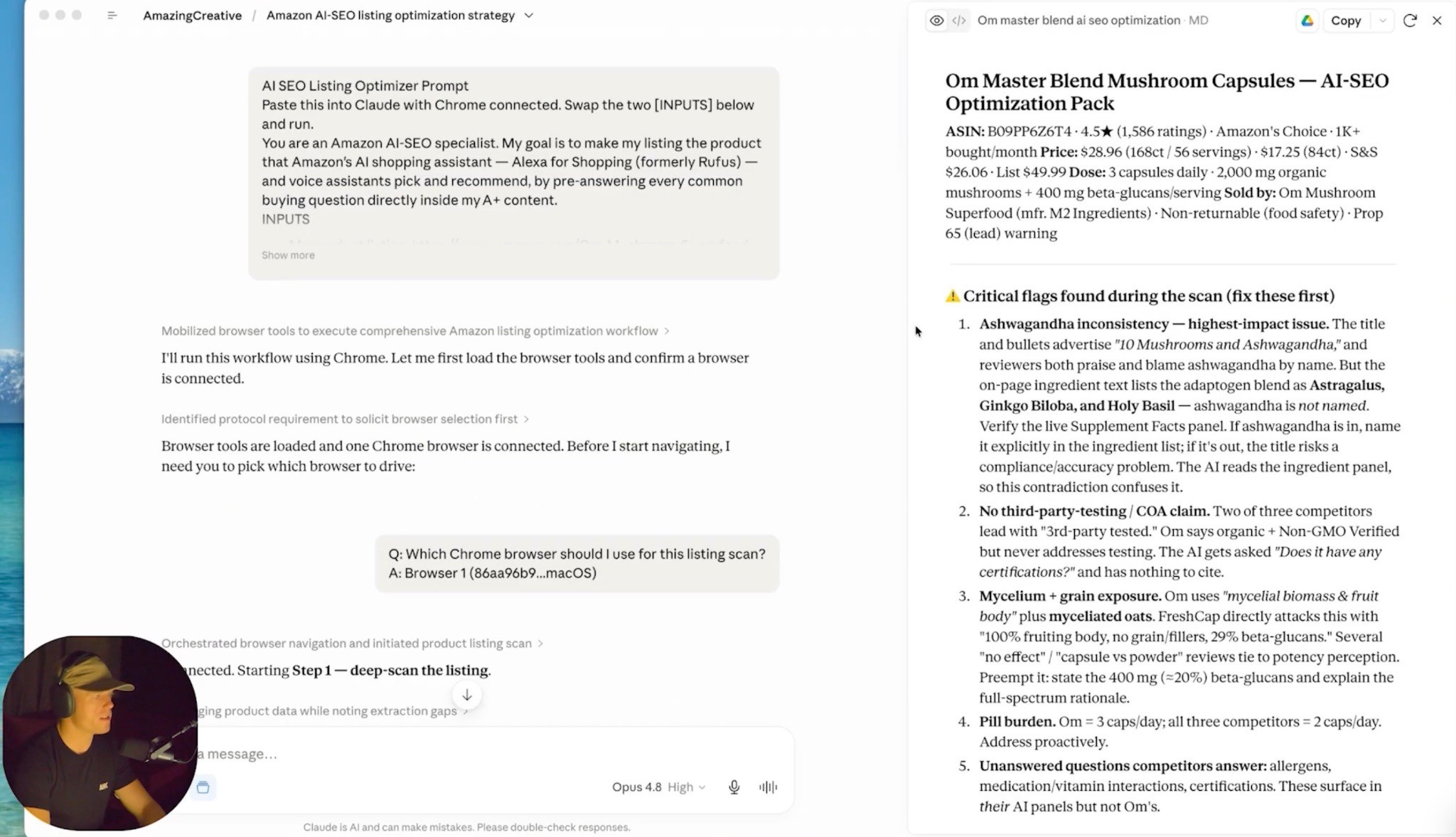
The opportunity changed as modern AI systems became capable of working with connected tools, account data, and external workflows.
Using Claude, contextual connections, and Amazon Advertising API access, we began building a system that could do more than summarize a spreadsheet or generate generic recommendations.
The goal was to create an AI-powered PPC workflow that could help our team:
Analyze campaign data faster
Detect patterns across large accounts
Identify wasted spend
Recommend bid and budget changes
Evaluate keyword and placement performance
Support keyword harvesting and negative targeting
Apply account-specific strategy more consistently
Help implement approved changes faster
We began running the system across client accounts at the start of 2026.
Six months later, the results from Proxy Wellness, Gion, Freeform, and DuraKeep demonstrate what can happen when AI-powered execution is combined with active human PPC management.
Why Context Changes Everything

The biggest difference is not automation.
Amazon PPC software has automated bids, budgets, and targeting decisions for years.
The difference is context.
When we onboard a new account, an experienced PPC manager does not immediately start lowering bids or pausing keywords.
The first step is understanding the business.
What is working? What is not? Which products have the strongest potential? Does the listing convert? Is the pricing competitive? Is the account launching, relaunching, or scaling? Does the brand have enough inventory to support more demand?
The strategy also changes depending on whether the objective is to:
Improve profitability
Increase organic ranking
Launch a new product
Gather conversion data
Defend branded traffic
Scale a proven ASIN
Reduce wasted spend
Protect limited inventory
That context is what separates an experienced Amazon PPC strategist from a junior manager, or a plain rules engine.
An AI-powered system built with real account context can support a similar process.
It can learn from the account’s history, campaign performance, strategic priorities, and manager feedback rather than treating every account as though it should follow the same rules.
Built Like an Agency, Not a Script
Under the hood, this is not one monolithic tool trying to handle every PPC responsibility at once.
It is designed more like an Amazon advertising team, with specialized functions supporting different parts of the account.
That includes:
Bidding
Day-parting
Placement adjustments
Negative-keyword management
Keyword harvesting
Budget allocation
Strategy supervision
Each function performs a different job, but those decisions still need to align with the wider account strategy.
For example, a keyword-harvesting system may identify a converting customer search term. But whether that term should be moved into a dedicated campaign, negated elsewhere, given more budget, or used for an organic-ranking push depends on the campaign’s purpose.
The same applies to bidding and budgeting.
A keyword may appear inefficient in isolation but still be contributing to a larger ranking or growth objective. A campaign may deserve more spend because it is acquiring valuable customers, even if its short-term ACoS is higher than another campaign.
The system helps process those decisions faster, while a human manager ensures they remain aligned with the account’s real goals.
From Strategy Conversation to Implementation
The system also helps address one of the most common problems inside agencies: the delay between making a strategic decision and fully implementing it.
A client may tell us that:
Their cost of goods changed
Their target ACoS needs to be updated
Inventory is arriving late
A product needs to be scaled
A campaign should prioritize profitability
A specific ASIN needs more ranking support
Traditionally, those changes may require someone to manually review campaigns, update targets, adjust bids, change budgets, and verify that the strategy was applied correctly across the account.
Depending on the size of the account, that process could take days.
“In the past, if a client told us their cost of goods changed and we needed new ACoS targets across the board, that could take a week or two to fully roll out,” Ryan says. “Now it’s a conversation, some notes fed into the system, and the changes can be implemented much faster.”
The strategic decision still comes from the manager and client.
AI simply reduces the delay between deciding what should happen and putting that strategy into action.
The Results So Far
The most important question is whether the system produces better business outcomes.
Here is what happened across four client accounts during the optimization period.
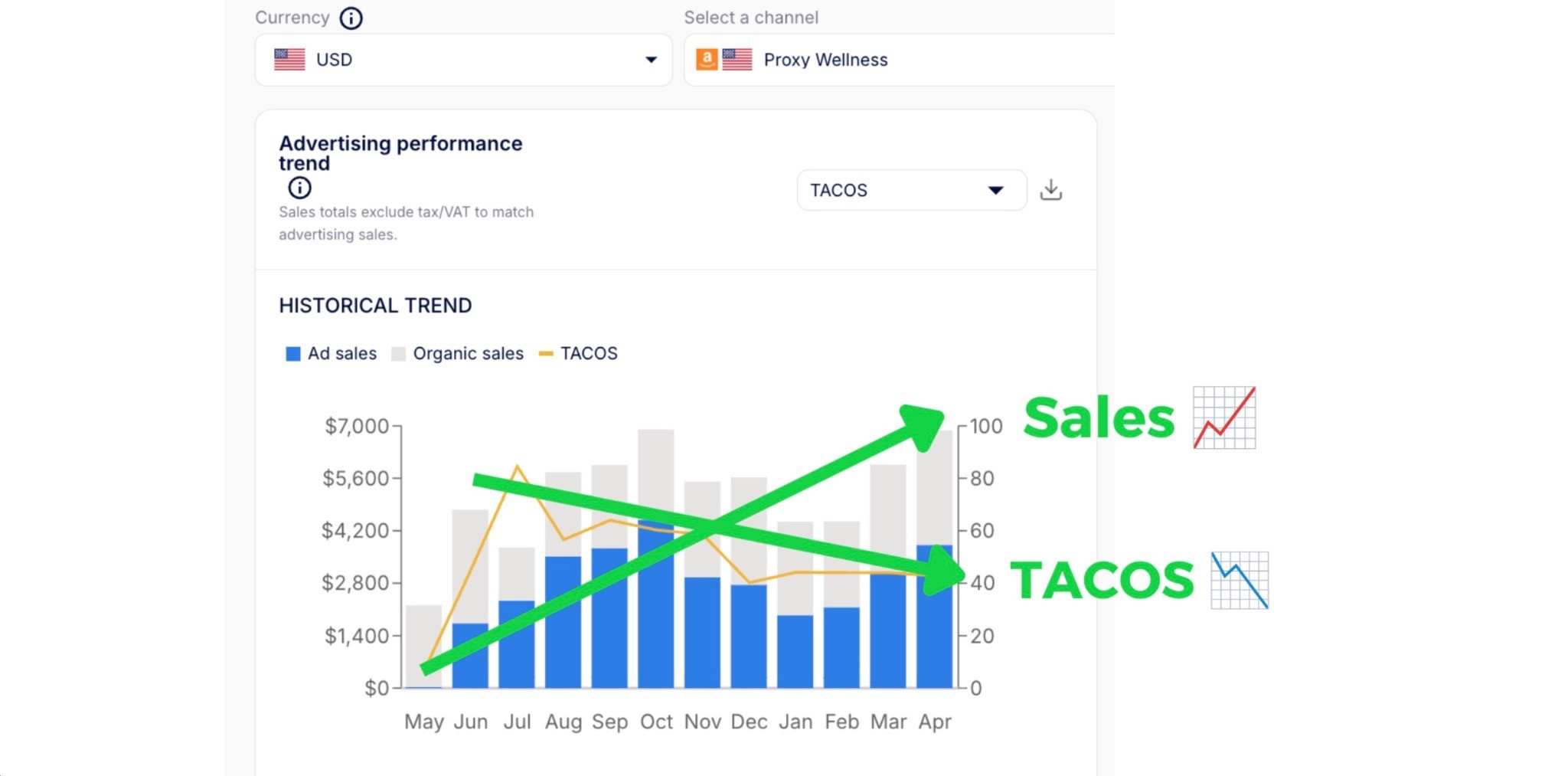
Proxy Wellness: Sales Increased 55% While TACoS Fell 26.6%

Proxy Wellness entered the optimization period with $4,443 in monthly sales.
In January:
Total monthly sales were
$4,443TACoS was 44.17%
ROAS was 0.99x
The account needed more than a set-it-and-forget-it automation tool.
The goal was to improve advertising efficiency while creating enough room for the brand to grow.
We implemented our human-managed AI-powered PPC system, using AI to process campaign data, identify patterns, and surface opportunities faster.
A human PPC strategist remained actively involved, adjusting priorities based on profitability, sales momentum, seasonality, and the account’s broader growth objectives.
By April, monthly sales had increased to $6,877.
That represented a 55% increase in monthly sales.
ROAS improved from 0.99x to 1.30x, a 31% improvement.
By June, TACoS had fallen from 44.17% to 32.41%, representing a 26.6% reduction in advertising’s share of total sales.
Proxy Wellness Performance Summary
Monthly sales:
$4,443to$6,877Sales growth: 55%
ROAS: 0.99x to 1.30x
ROAS improvement: 31%
TACoS: 44.17% to 32.41%
TACoS reduction: 26.6%
Proxy Wellness generated more revenue while becoming less dependent on advertising.
Gyeon: Sales Grew 91% While TACoS Remained Low

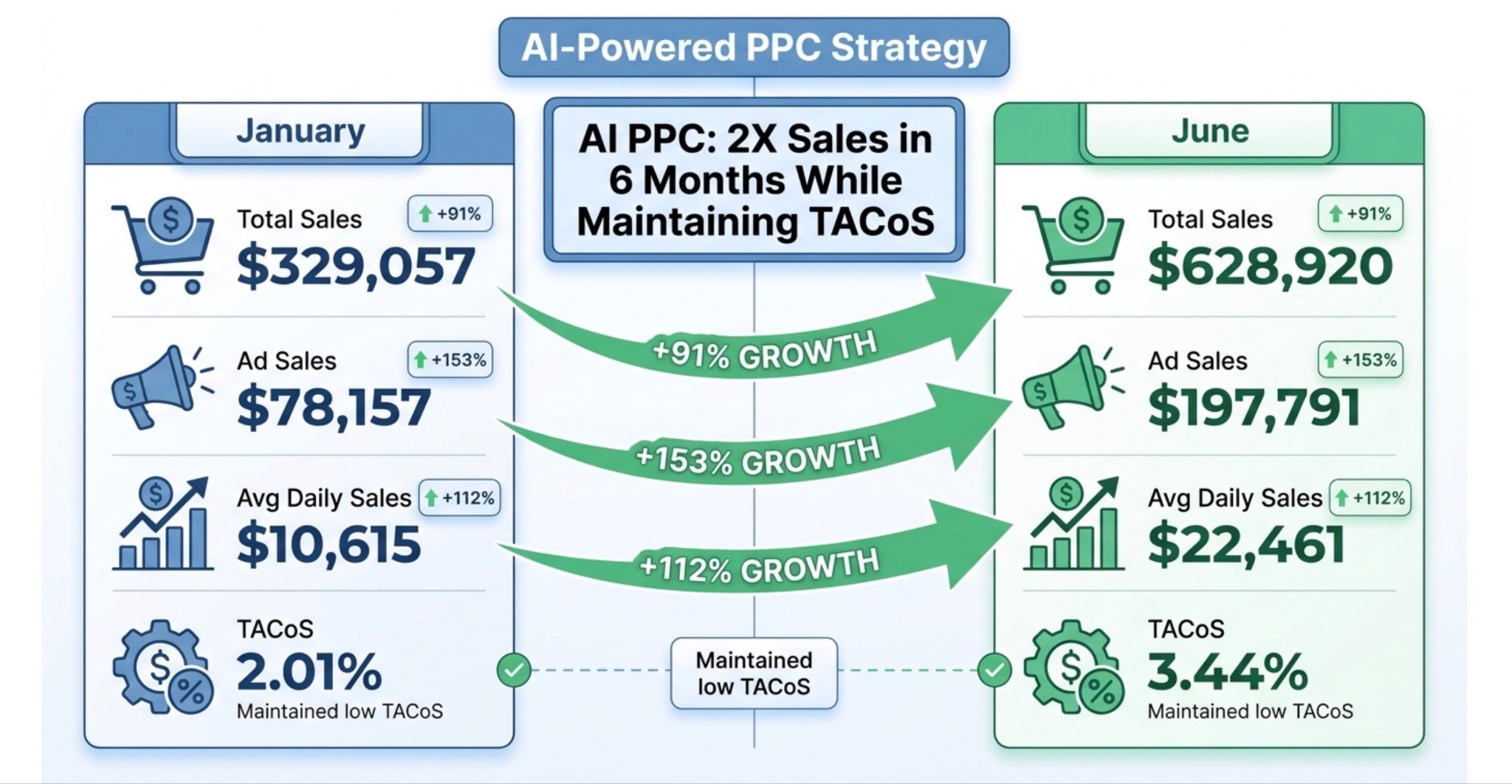
Gyeon began the period generating $329,057 in monthly sales.
By June, sales had increased to $628,920.
That represents 91% growth in six months.
Advertising-attributed sales increased from $78,157 to $197,791, while average daily sales rose from $10,615 to $22,461.
TACoS increased from 2.01% to 3.44%, but remained extremely low relative to the account’s overall revenue while monthly sales nearly doubled.
Gyeon Performance Summary

Total sales:
$329,057to$628,920Total sales growth: 91%
Advertising sales:
$78,157to$197,791Advertising sales growth: 153%
Average daily sales:
$10,615to$22,461Average daily sales growth: 112%
TACoS: 2.01% to 3.44%
This is an important distinction.
A higher advertising spend ratio is not automatically a negative result when it supports substantially greater total revenue and remains efficient relative to the size of the account.
Freeform: Sales Increased 496% While ACoS Improved 81.4%
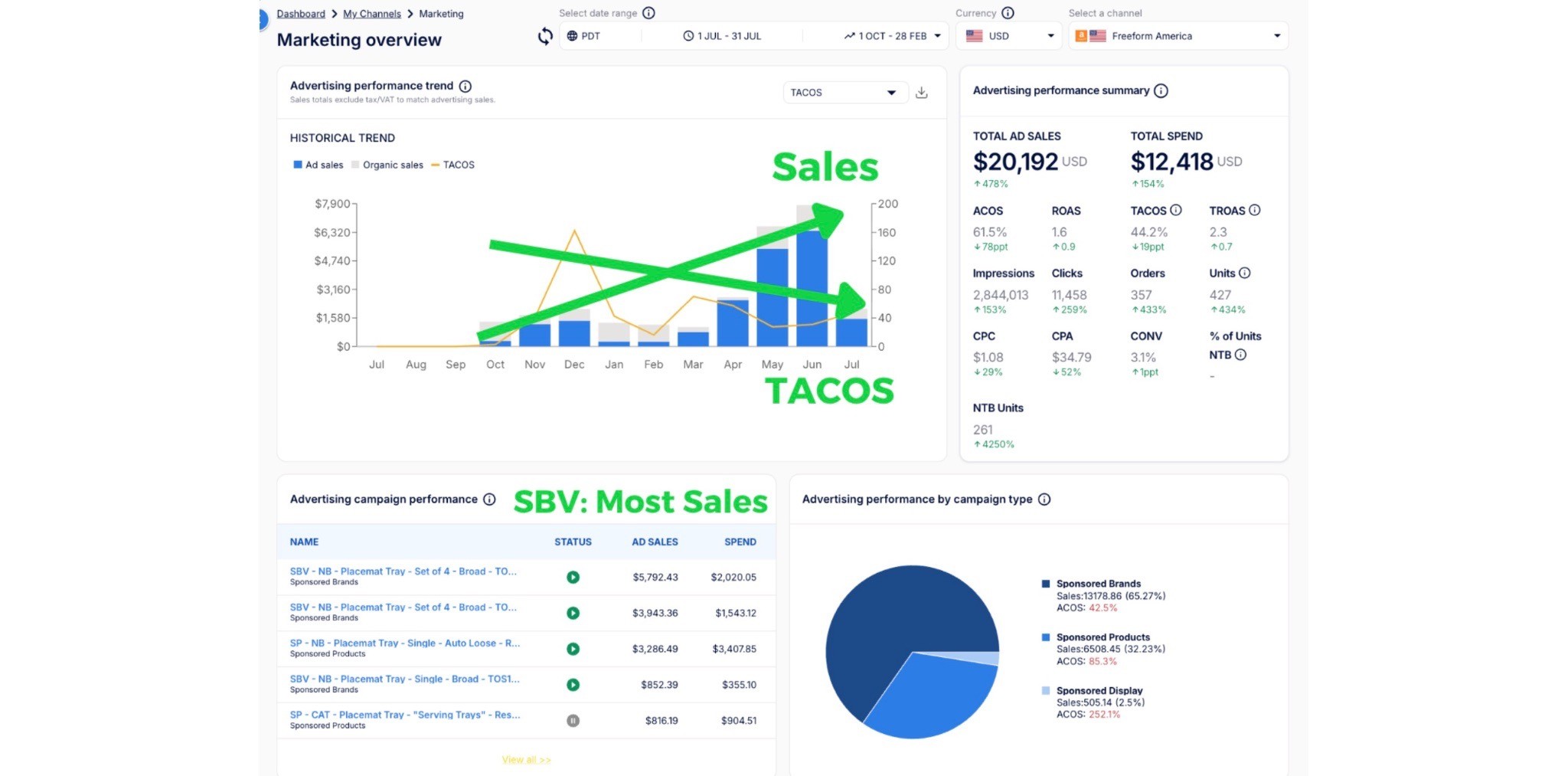
Freeform entered the optimization period with an expensive and inefficient advertising account.
In January:
Total monthly sales were
$1,313Advertising-attributed sales were
$275ACoS was 202.72%
ROAS was 0.49x
Customer-acquisition cost was
$92.89The account generated 25 monthly orders
At a 202.72% ACoS, the account was spending more than two dollars on advertising for every dollar in attributed ad revenue.
This could not be solved by automating bids alone.
The account needed restructuring, active oversight, and a strategy for improving efficiency without removing its ability to grow.
By June, monthly sales had increased to $7,829.
That represents a 496% increase in total sales, bringing the account to nearly six times its original monthly revenue.
Advertising-attributed sales increased from $275 to $6,407, representing approximately 2,230% growth.
Monthly orders increased from 25 to 135, a 440% improvement.
At the same time, advertising efficiency improved significantly.
ACoS fell from 202.72% to 37.62%, an improvement of approximately 81.4%.
ROAS increased from 0.49x to 2.66x, while customer-acquisition cost declined from $92.89 to $21.33.
Freeform Performance Summary
Monthly sales:
$1,313to$7,829Sales growth: 496%
Advertising sales:
$275to$6,407Advertising sales growth: 2,230%
Monthly orders: 25 to 135
Order growth: 440%
ACoS: 202.72% to 37.62%
ACoS improvement: 81.4%
ROAS: 0.49x to 2.66x
ROAS improvement: 443%
Customer-acquisition cost:
$92.89to$21.33CAC reduction: 77%
Freeform demonstrates that account growth and improved efficiency do not always need to be opposing goals.
DuraKeep: From $647 to $13,270 per Month
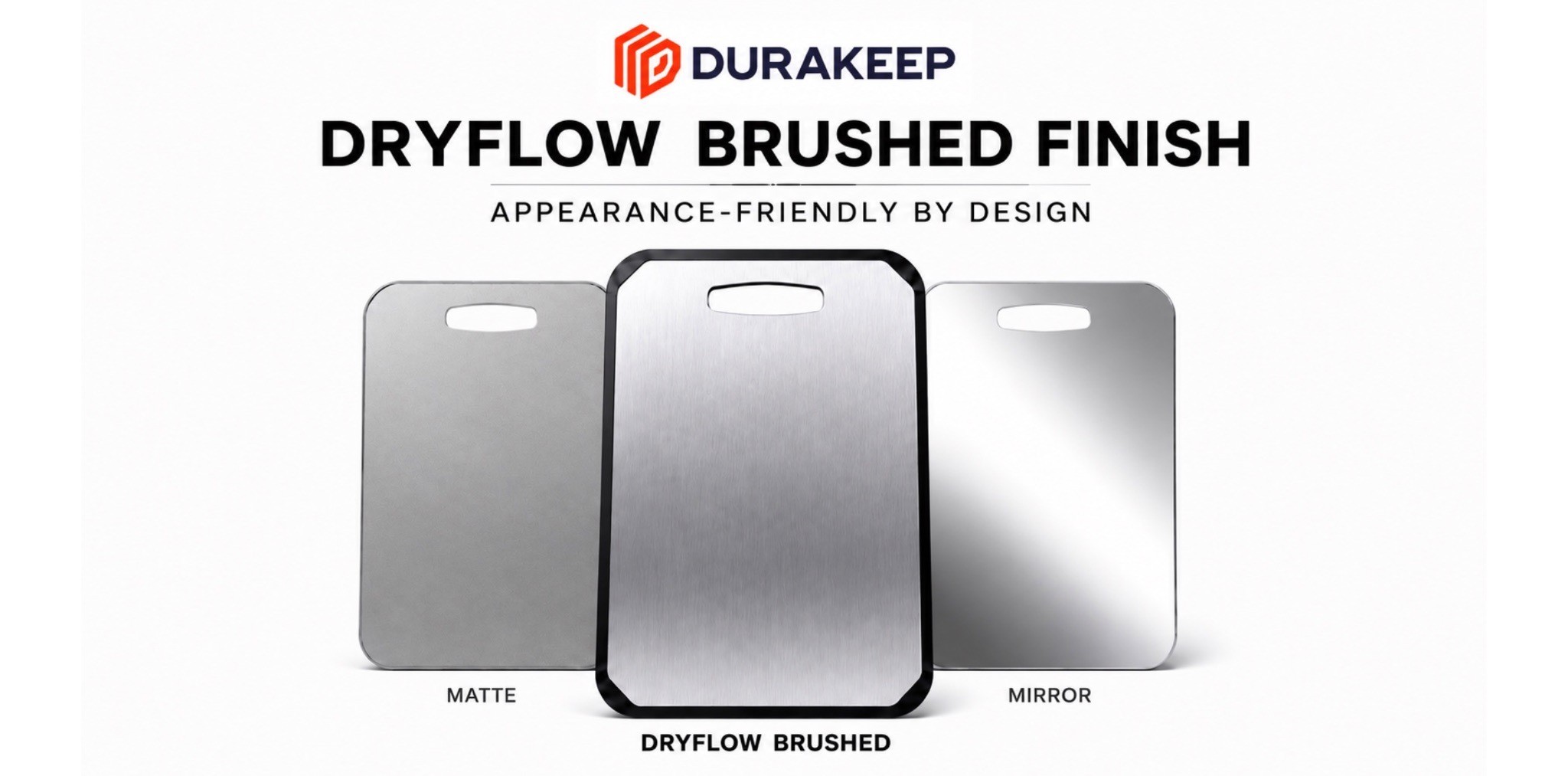
DuraKeep began as a small, single-product kitchen brand with limited traffic, sales, and order volume.
In February, the account generated:
$647in total monthly sales$467in advertising-attributed sales18 customer orders
$58.86in average daily sales$278in reported gross profit
The account had significant growth potential, but unlocking it required more than turning on an automated platform.
It required a controlled scaling strategy.
We deliberately increased advertising investment while monitoring sales, attributed revenue, order volume, campaign performance, and gross profit.
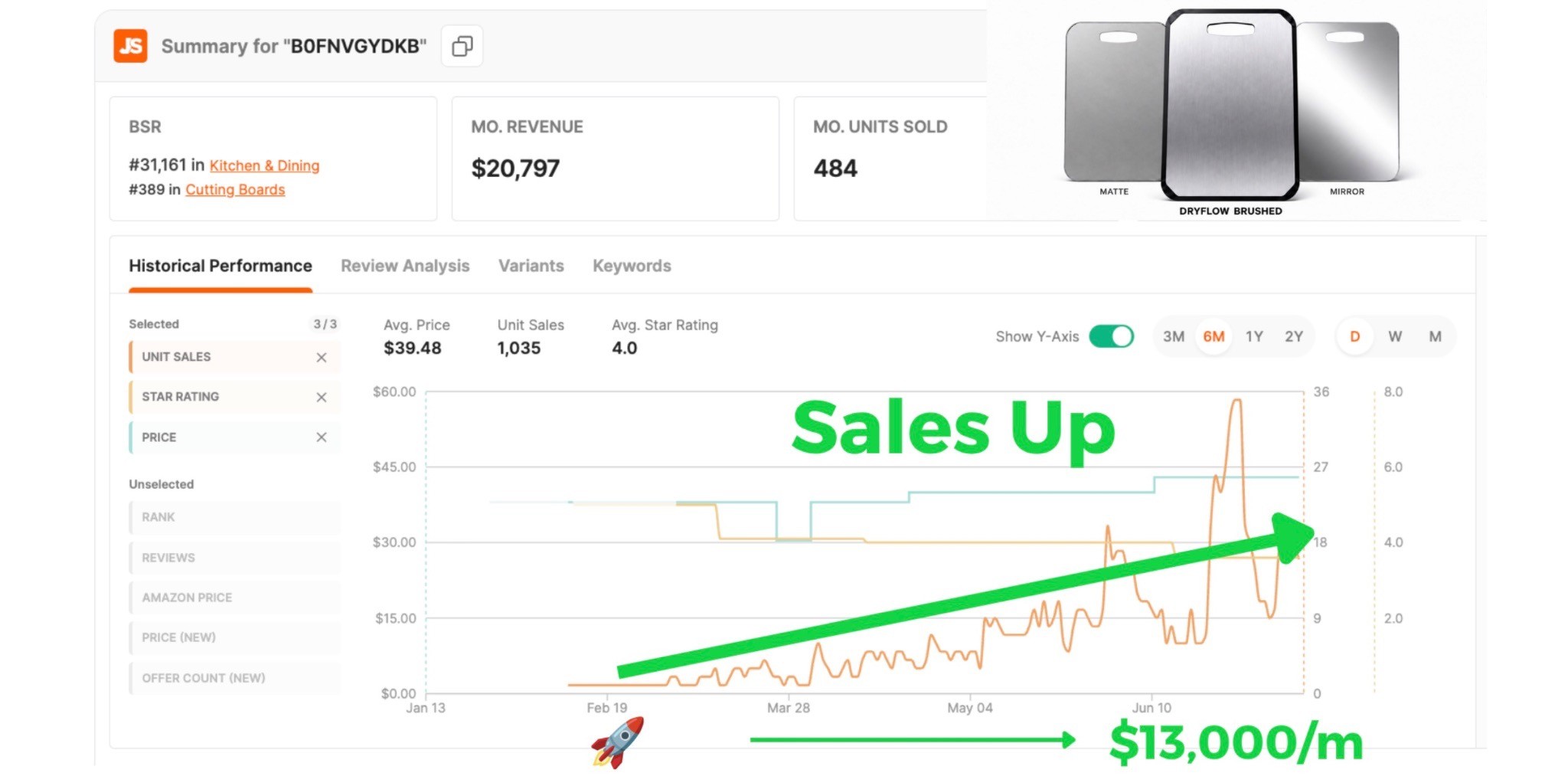
Ad spend increased from $473 in February to $9,691 in June.
By June, monthly sales had reached $13,270.
That represents a 1,950% increase in total sales, or approximately 20.5 times the account’s starting monthly revenue.
Advertising-attributed sales increased to $11,731, representing approximately 2,410% growth.
Monthly orders increased from 18 to 336, while reported gross profit rose from $278 to $5,706.
DuraKeep Performance Summary
Monthly sales:
$647to$13,270Sales growth: 1,950%
Advertising sales:
$467to$11,731Advertising sales growth: 2,410%
Monthly orders: 18 to 336
Order growth: 1,767%
Average daily sales:
$58.86to$442.33Average daily sales growth: 651%
Reported gross profit:
$278to$5,706Ad spend:
$473to$9,691
DuraKeep was intentionally managed as a growth-focused account.
The objective was not to immediately minimize advertising spend. It was to determine how aggressively the brand could scale while continuing to monitor total revenue, orders, gross profit, and account performance.
Why ACoS Alone Is Not Enough
One of the biggest advantages of context-aware PPC is that it can evaluate more than a single advertising metric.
Lowering ACoS may look like an obvious improvement.
But it is not always the best outcome for the business.
We have seen accounts where cutting ad spend improved ACoS but reduced total sales, organic ranking, and total profit.
That happens because Amazon advertising does not exist in isolation.
PPC can influence:
Sales velocity
Organic rankings
Keyword visibility
Total revenue
Customer acquisition
Inventory turnover
Long-term profitability
The correct target depends on what the account is trying to achieve.
A launch-stage product may temporarily accept a higher ACoS to collect data and build ranking.
A mature account may prioritize profitability.
A consumable product with strong customer lifetime value may be able to spend more to acquire a customer than a one-time-purchase product.
This is why TACoS, total revenue, organic sales, margins, inventory, and customer value need to be considered alongside ACoS.
Otherwise, software can become very efficient at optimizing the wrong objective.
Inventory-Aware PPC Management
Inventory is another area where generic PPC rules often fall short.
The ideal advertising strategy changes when:
A product is at risk of stocking out
New inventory is still in transit
FBA inventory is distributed unevenly
Delivery speeds have slowed
A product has enough stock to support aggressive scaling
A ranking push may create more demand than the brand can fulfil
An aggressive budget strategy may make sense for a product with strong conversion and several months of inventory.
The same strategy could damage a product that is about to run out of stock.
A context-aware system can help surface those conflicts before another budget increase is approved.
But the final decision still needs human oversight.
It Still Needs an Expert Behind the Wheel
To be clear, this is not a magic button.
The system does not know your goals unless you define them.
It cannot automatically understand your margins, acceptable risk, inventory strategy, growth objectives, or long-term priorities without being given that context.
The wrong strategy will still produce the wrong result, whether it is executed manually or through artificial intelligence.
That is why every account still has an experienced PPC manager overseeing the system.
AI helps us:
Process more data
Identify patterns faster
Detect opportunities
Reduce repetitive work
Implement approved decisions more efficiently
The human strategist still needs to:
Define the objective
Interpret the data
Review important recommendations
Decide when higher short-term spend is justified
Protect inventory and profitability
Prevent conflicting changes
Determine whether the account should prioritize growth or efficiency
AI makes the strategist faster.
It does not make strategy optional.
Video Creative Still Matters
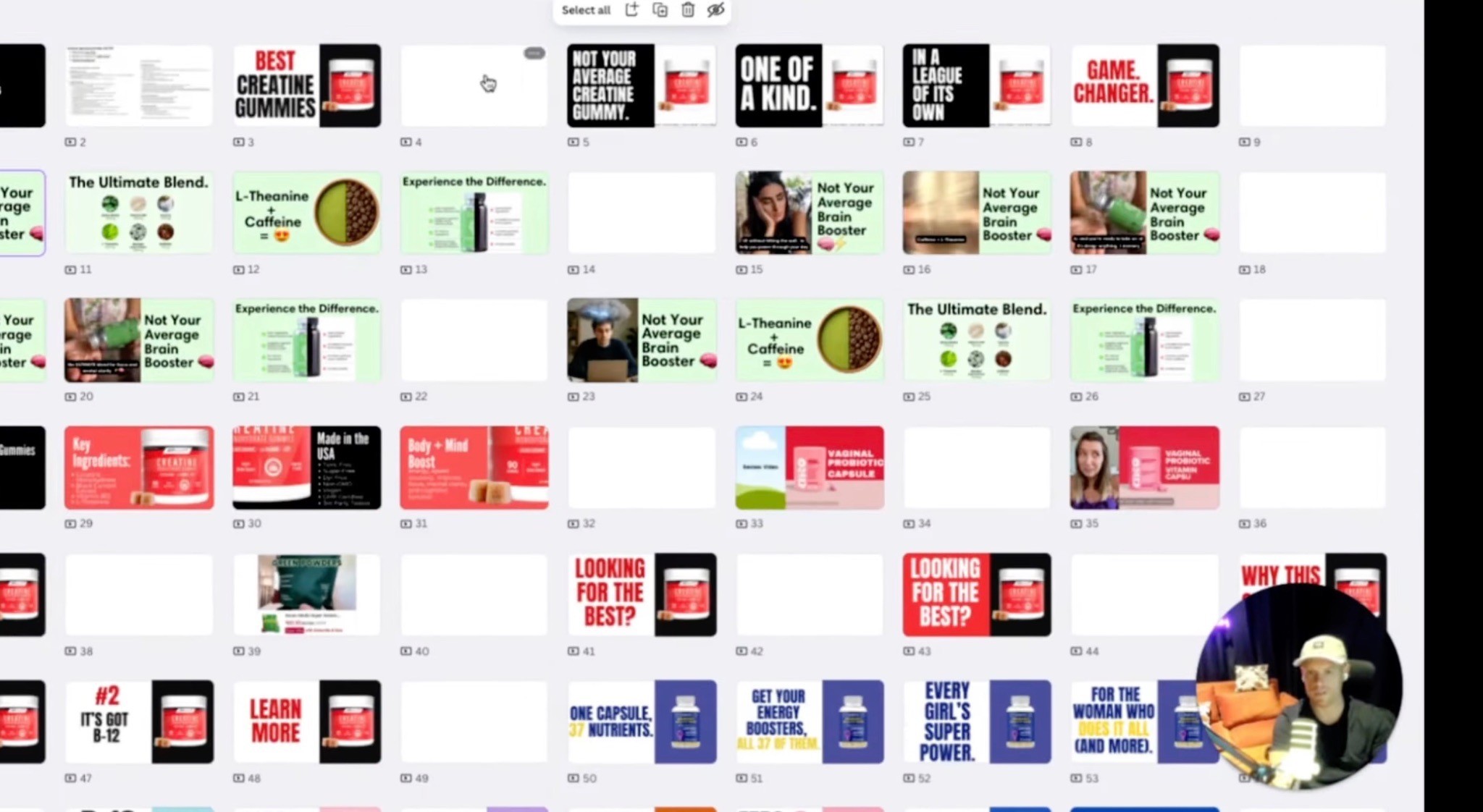
For the right products, Sponsored Brands Video remains one of the biggest Amazon advertising opportunities.
Better campaign management can improve bids, targeting, placements, and budgets.
But it cannot fully compensate for creative that shoppers ignore.
Strong video advertising can:
Capture attention in the search results
Communicate the product’s main benefit quickly
Demonstrate the product in use
Improve click-through rate
Differentiate the offer from nearby competitors
Give shoppers a reason to visit the listing
We have seen strong video creative produce substantial improvements in advertising performance and, in some cases, nearly double sales.
AI-powered PPC works alongside that creative, not instead of it.
The advertising system determines how effectively the asset is distributed.
The creative determines whether shoppers care.
Rules-Only PPC Management Is Becoming Outdated
We do not say that lightly.
Traditional automation will continue to be useful for repetitive tasks, bid adjustments, budget rules, and bulk campaign management.
But software that reacts only to isolated metrics is becoming increasingly limited.
The results from Proxy Wellness, Gyeon, Freeform, and DuraKeep show the advantage of combining AI-powered analysis with active human strategy.
Across these accounts, we saw:
Monthly sales growth ranging from 55% to 1,950%
Major improvements in ACoS, TACoS, ROAS, and customer-acquisition cost
Faster account scaling
Better alignment between advertising and wider business goals
More informed decisions about growth versus efficiency
Less reliance on one-dimensional rules
The future of Amazon PPC is not uncontrolled automation.
It is AI-powered PPC guided by experienced Amazon strategists.
Brands that adopt that model early will be better positioned to move faster, interpret data more intelligently, and make advertising decisions based on the entire business, not just what happened inside one campaign yesterday.
See What AI-Powered PPC Could Do for Your Account
Every Amazon account has different products, customers, margins, inventory constraints, and growth opportunities.
That is exactly why a universal PPC strategy does not work.
Amazing Marketing Co. combines AI-powered Amazon PPC management with experienced human strategy, conversion analysis, inventory awareness, organic-ranking objectives, and active account oversight.
Interested in seeing what AI-powered PPC could do for your account?
Visit Amazing Marketing Co.’s AI-Powered PPC Manegement service or contact riley@amazingmarketingco.com, and we’ll walk you through it.